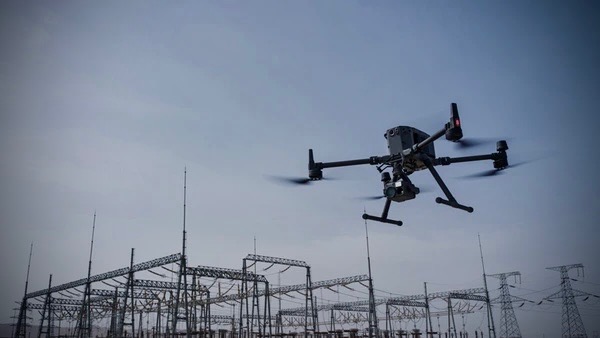
Global Security Solutions designs the governance, compliance structure, and operational framework required to integrate drone capabilities into high-consequence security environments.
We ensure drone programs are controlled, documented, and aligned with regulatory and executive oversight requirements, strengthening security posture without introducing unmanaged risk.

Evaluate potential drone threats
specific to the location,infrastructure,
and operational needs.

Establish restricted zones with
enforced
"No Fly Zones" and geofencing
technologies to prevent
unauthorized access.

Utilize radar, RF detection,
and AI-driven
tracking to identify and follow drones
from long distances, with real-time
data feed to SOCs.

Equip sites with interception tools like
signal jammers,
RF-based drone control,
and autonomous drone defense
systems to neutralize threats.

Implement escalation protocols,
offensive surveillance
capabilities, data
management, regulatory compliance,
and kinetic response options.

Evaluate potential drone threats
specific to the location,infrastructure,
and operational needs.

Establish restricted zones with enforced
"No Fly Zones" and geofencing
technologies to prevent
unauthorized access.

Utilize radar, RF detection, and AI-driven
tracking to identify and follow drones
from long distances, with real-time
data feed to SOCs.

Equip sites with interception tools like
signal jammers, RF-based drone control,
and autonomous drone defense
systems to neutralize threats.

Implement escalation protocols,
offensive surveillance capabilities, data
management, regulatory compliance,
and kinetic response options.
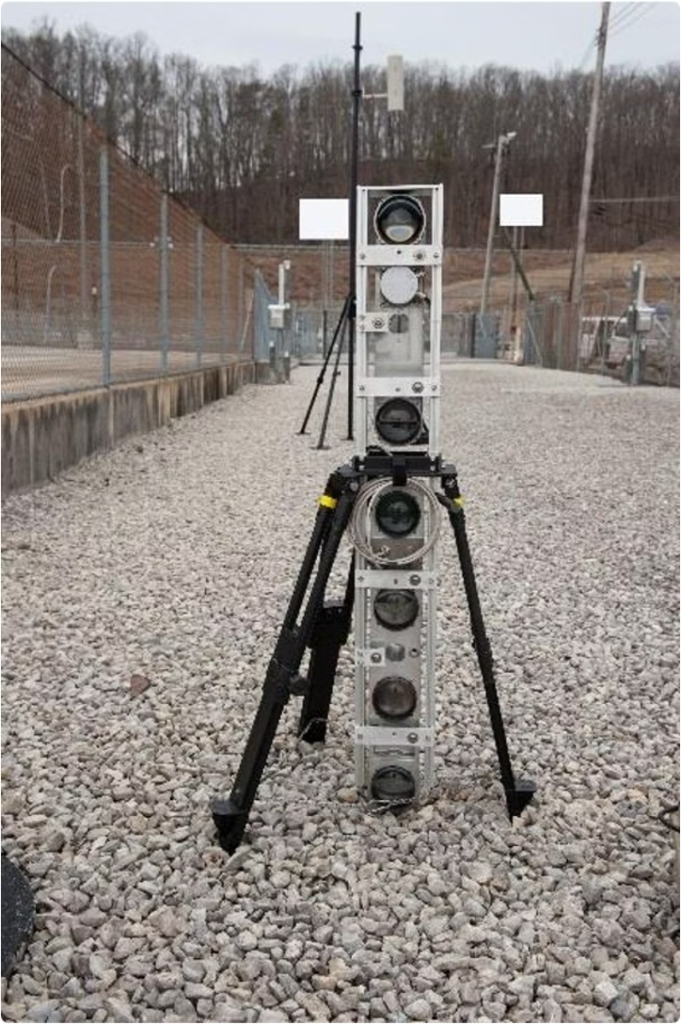
Rather than increasing personnel overhead to address emerging security demands, secure wireless communications technology enables scalable, resilient operations without expanding recurring labor costs.
Deployable immediately and scalable to evolving threat environments, secure wireless communications support video monitoring, intrusion detection systems, drone operations, and broader critical infrastructure applications.
Built-in safeguards prevent signal disruption, ensuring reliable communications even in high-interference environments.
Implements AES-256 encryption and FIPS 140-3 compliant security standards aligned with NIST requirements for high-assurance commercial and federal applications.
The Sentinel R1 system has been evaluated by multiple U.S. government agencies, including the U.S. Department of Energy (DOE) and the U.S. Air Force, under a range of operational conditions.
The platform has been deployed in high-consequence security environments and supports secure communications, sensor integration, and operational monitoring in mission-critical settings.
DOE reporting describes the system as demonstrating flexible and configurable operation as a portable alarm-monitoring platform, providing consistent bandwidth, reliable connectivity, real-time status monitoring, usable video feeds, and remote camera control.
Designed for rapid deployment and adaptable integration, Sentinel R1 strengthens operational continuity and security posture across both fixed and evolving environments.
The Sentinel security system includes advanced features such as real-time monitoring, alerts, with full data encryption, ensuring comprehensive protection. System
has been tested using all NRC 73.55 qualified sensors, cameras and lighting systems. System can be used as an interim or permanent solution. The system has supported U.S. Air Force operations across a 1,500-square-mile area over a two-year deployment period.
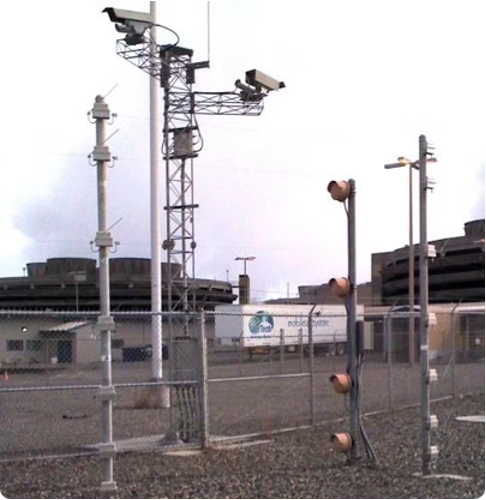
Deploys integrated thermal and CCD camera systems to provide comprehensive, continuous surveillance coverage.
Engineered to deliver detection and assessment performance that meets or exceeds NRC regulatory requirements.
Combines sensors, communications, and power systems to enable rapid deployment and reliable operation across diverse environments.
Designed and configured to align with applicable guidelines and site-specific compliance standards.
Sentinel’s intrusion detection system identifies unauthorized access in real-time, ensuring prompt response to potential
threats. Capabilities include microwave, infrared, taut-wire, buried, and fence-mounted detection systems, tailored to site-specific risk profiles.
High-definition thermal and optical cameras provide continuous monitoring and enhanced visibility. Each Sentinel kit is configured to site-specific requirements and includes integrated sensors, communications equipment, and power systems to support sustained operations.
Real-time alerts and automated notifications enable rapid response and informed decision-making across security operations teams.
The system detects signal interference and disruption attempts, enabling immediate mitigation and maintaining operational continuity.
Engineered for reliability in harsh and variable environments, the system maintains secure communications and sensor performance across extreme weather and operational conditions.